
Why Mold Is a Bigger Risk in the San Fernando Valley Than Most People Realize
Northridge and the surrounding San Fernando Valley communities experience a Mediterranean climate that most people associate with sunshine and dry summers — but seasonal El Niño rains, aging plumbing infrastructure, and tight modern building envelopes create ideal conditions for hidden mold growth year-round. At Alchemist Mold Testing, our certified inspectors regularly find active mold colonies in homes where the owner had no idea anything was wrong. Knowing the early warning signs can save you thousands of dollars and protect your family's health.
1. A Persistent Musty or Earthy Odor
The unmistakable damp, musty smell associated with mold is caused by microbial volatile organic compounds (MVOCs) released as mold colonies metabolize organic material in drywall, wood framing, and insulation. If you notice this smell in a specific room — particularly a bathroom, laundry area, basement, or any room adjacent to an exterior wall — and it doesn't go away after cleaning, there's a good chance active mold growth is occurring somewhere concealed. Don't rely on air fresheners to mask the odor; schedule a professional mold inspection to find the source.
2. Unexplained Respiratory Symptoms Among Household Members
Mold spores are microscopic and become airborne easily, circulating through your home's air every time the HVAC fan runs. Occupants may experience chronic nasal congestion, sneezing, itchy eyes, throat irritation, or worsening asthma symptoms — especially if symptoms improve when they leave the house and return when they come back home. These are classic signs of elevated airborne mold spore concentrations. Our indoor air quality testing service can measure actual airborne spore counts and compare them to outdoor baseline levels to confirm whether mold is the culprit.
3. Visible Dark Staining on Walls, Ceilings, or Grout
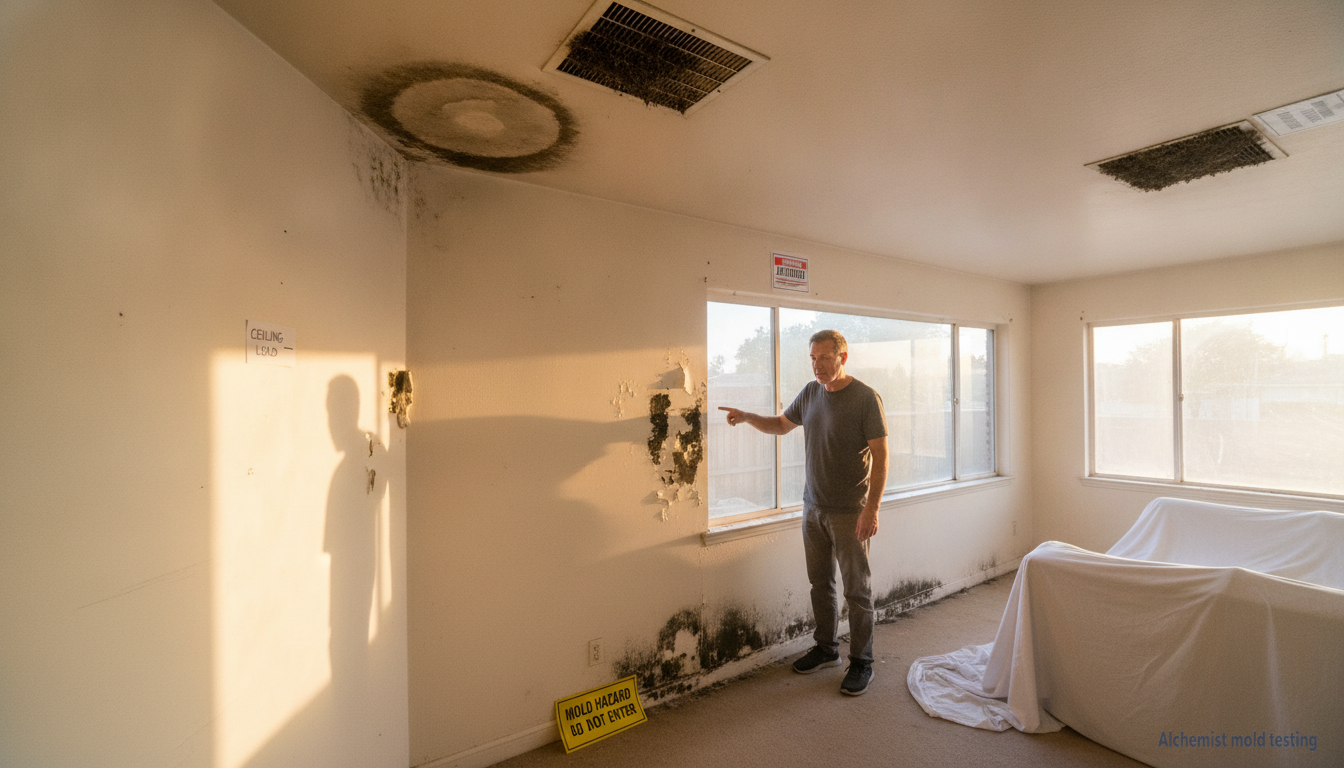
Obvious dark spots on bathroom tile grout, black streaks on ceiling drywall, or greenish patches on exterior-facing walls are the most recognizable mold warning signs. However, visible surface mold is often just the tip of the iceberg — the same moisture source fueling surface growth is almost always causing additional colonization inside wall cavities, behind baseboards, and under flooring where you can't see it. A comprehensive mold inspection using thermal imaging and air sampling reveals the true extent of the problem.
4. Water Stains or Discoloration You've Never Explained
Yellow-brown water stains on ceilings or walls indicate prior or active water intrusion. Even if the leak appears to have stopped, saturated building materials may still hold moisture well above safe thresholds — and any moisture above those levels sustains mold growth. Our water damage inspection service uses infrared thermal imaging and calibrated moisture meters to determine whether stained areas are still wet and whether mold growth has begun inside the wall assembly.
5. Warping, Bubbling, or Buckling Surfaces
Drywall that has begun to warp, paint that bubbles or peels, wooden floorboards that cup or buckle, and wallpaper that lifts at the seams are all physical signs that moisture has infiltrated building materials. These deformation patterns occur when wood and paper-faced materials absorb water — the same process that accelerates mold colonization. If you notice any of these changes in your Northridge home, don't wait for visible mold to appear before taking action.
6. Dark Buildup on HVAC Registers or Grilles
Dusty, dark buildup around supply air registers is one of the most overlooked mold warning signs in Southern California homes. When mold or microbial contamination is present inside the air handler, evaporator coil, or ductwork, the system distributes spores to every room simultaneously. Our HVAC mold and air quality inspection collects surface swabs from coil fins and drain pans as well as air samples taken directly from supply registers while the system runs — giving you laboratory-confirmed data on exactly what your HVAC is delivering into your living space.
7. A History of Water Events in the Home
Past flooding, roof leaks, burst pipes, appliance failures, or slab leaks significantly elevate a home's mold risk even years after the event occurred — particularly if drying was incomplete or undocumented. Mold can remain dormant in dry building materials and reactivate whenever humidity rises again. Homeowners in neighborhoods like Reseda, Winnetka, and North Hills with older housing stock should consider a proactive inspection if the property has any water damage history.
What to Do If You Recognize These Signs
If one or more of these warning signs are present in your Northridge home, the next step is professional testing — not guessing. Alchemist Mold Testing provides certified mold inspection and air sampling following IICRC S520 guidelines, with all samples analyzed by an accredited third-party laboratory. Because we test only and do not remediate, our findings carry no conflict of interest.
- Schedule a mold inspection and testing appointment if you suspect hidden growth
- Add a water damage inspection if you have unexplained staining or a history of leaks
- Consider indoor air quality testing if household members have unexplained respiratory symptoms
- Book an HVAC mold inspection if you notice musty odors only when the system runs
Call Alchemist Mold Testing at (818) 600-0421 or email [email protected] to schedule your inspection Monday through Sunday, 8:00 AM to 6:00 PM. We serve Northridge and all surrounding San Fernando Valley neighborhoods.
Questions about inspection in Northridge, CA? We're happy to help — no sales pressure.
Talk to a Local Pro
Call +18186000421 or fill out our online form for a free, no-obligation quote.
Request Free Quote